
Reducing Structural Load with Advanced Parking Systems
Parking is often treated as a space-planning problem, but it is also a structural problem. The way vehicles are stored, moved, and supported can influence the size, cost, and complexity of the building around them.
The Hidden Weight of Conventional Parking

In many developments, parking is one of the heaviest and least flexible parts of the project. Conventional garages require long drive aisles, ramps, turning areas, intermediate slabs, and large structural bays that can carry moving vehicle loads across wide areas. These elements do not only consume space. They also influence the structural frame, the foundation strategy, and the coordination between architecture and engineering.
For developers, the structural impact of parking can become visible late in design. A garage that looks efficient in plan may still require deep beams, heavy transfer conditions, thick slabs, large columns, or expensive excavation to make the layout work. By the time those requirements appear in cost estimates, redesign becomes difficult and expensive.
Why Advanced Parking Systems Change the Equation
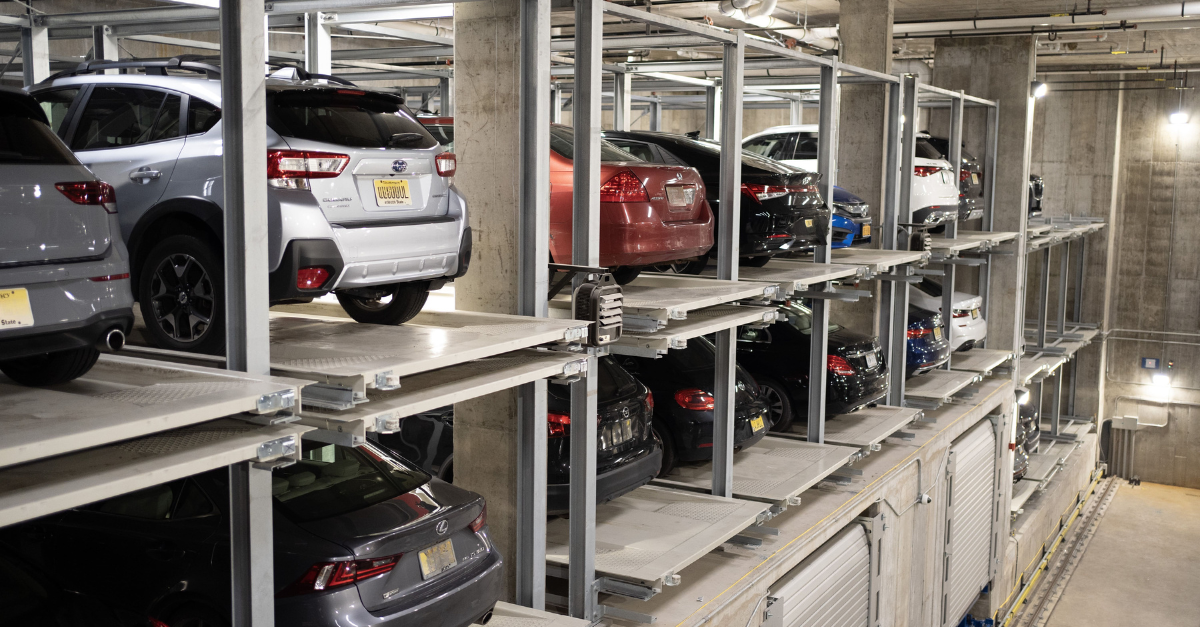
Advanced parking systems can reduce the structural burden by changing how vehicles are stored and circulated. Instead of designing an entire garage around human-driven movement, a system-based layout can concentrate vehicle storage into a more controlled footprint. Fewer ramps, shorter travel paths, and more organized stacking can reduce the amount of structural area that must be built only for circulation.
The value is not that every project automatically becomes lighter. The value is that the parking area becomes more predictable. When loads are organized around defined support points and engineered equipment zones, the design team can evaluate structural requirements earlier and with more clarity. This helps avoid the common situation where the parking layout drives unexpected structural consequences.
Developer Value
Reduced structural complexity can support better cost control. If the design team can minimize unnecessary slabs, reduce long-span conditions, avoid excessive ramp structures, or simplify load paths, the project may gain construction and coordination advantages. Even when the savings are not measured only in concrete or steel, the reduced design friction can be valuable.
For urban projects, structural efficiency also protects flexibility. A more compact parking approach may allow the building program to use more of the site for revenue-generating space. That can mean more rentable area, better amenity planning, improved ground-floor use, or a cleaner building core arrangement.
AutoMotion Perspective
AutoMotion approaches parking as part of the building strategy, not as an isolated accessory. By helping developers evaluate parking systems early, AutoMotion can support conversations around layout efficiency, structural coordination, access planning, and long-term usability. The goal is not only to park more vehicles. The goal is to reduce the pressure that parking places on the entire project.
When advanced parking is considered early, the structural team can coordinate around the system instead of reacting to parking after the building is already shaped. That is where the real advantage appears: fewer surprises, clearer planning, and a parking solution that supports the building rather than controlling it.
Key Takeaway
Structural load reduction is not only about making a garage lighter. It is about making parking more organized, more predictable, and easier to integrate. For developers, advanced parking systems can help turn parking from a heavy design burden into a coordinated building asset.